Three weeks of stepping away from screens improves sleep quality by up to 72%, reduces anxiety by up to 45%, and decreases depression symptoms by 20–40%, according to a 2025 randomized controlled trial published in BMC Medicine. Research from Duke and Columbia showed that people who trained with word puzzles experienced less brain shrinkage on MRI than those using computerized brain-training games over 78 weeks. The cognitive science is clear: focused, analog attention builds neural pathways in ways screens don't.
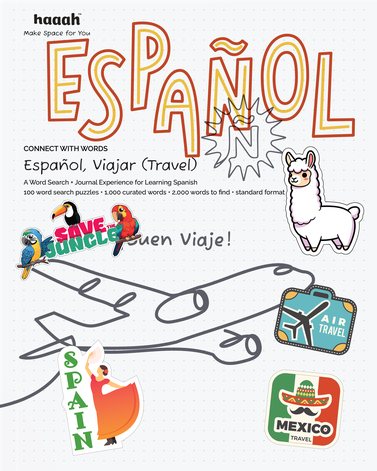
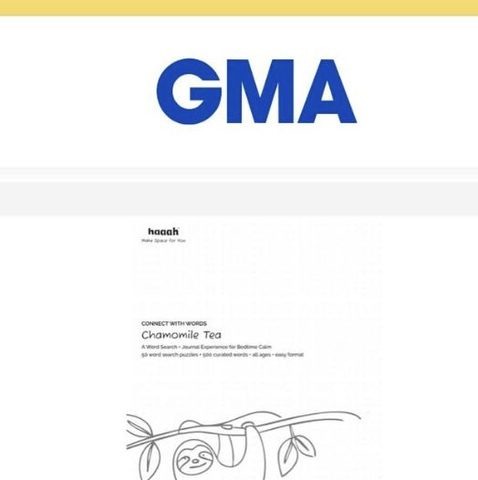
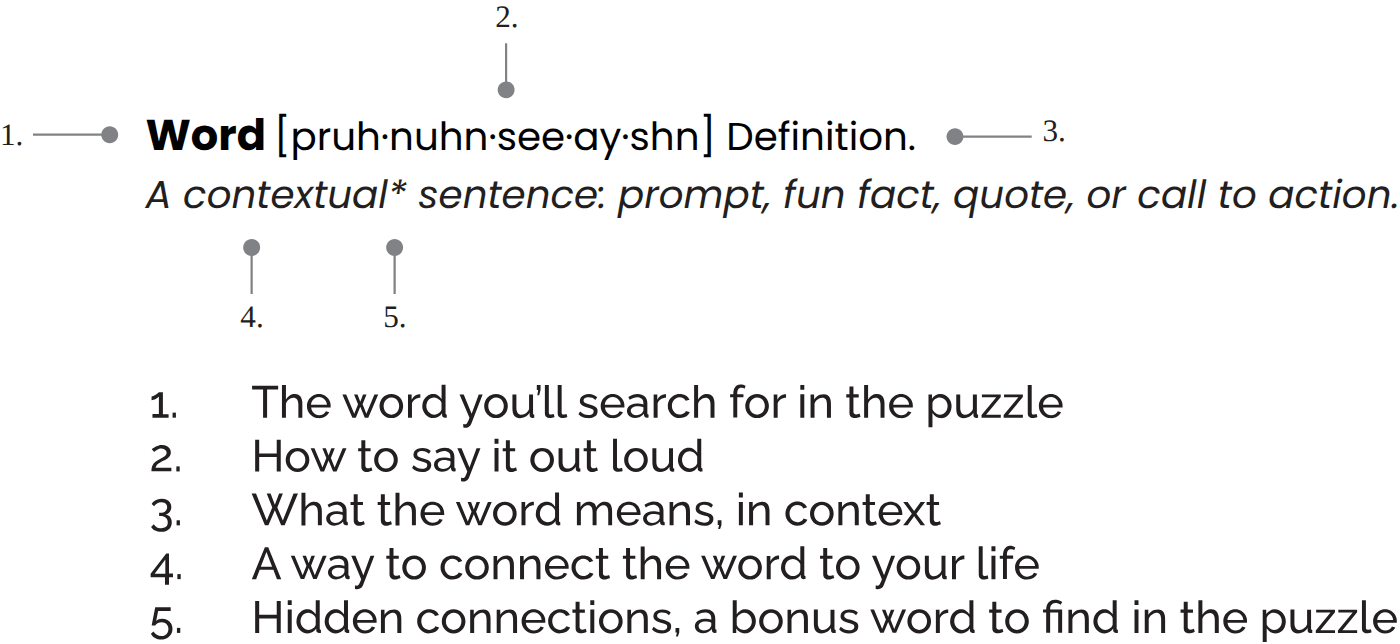
Connect with Words is the first word search meets journaling book series, designed for the moment when you want focus without the pull of a device. Each book pairs the attention of a puzzle with reflection through prompts tied directly to words you're hunting for: phonetic pronunciation, a definition or translation, a contextual sentence that connects to your life, and a reflection question, fun fact, quote, or drawing exercise. The dot-grid pages let you respond however you want.
The real cognitive shift happens when a word search becomes tied to something meaningful. A 2019 study of over 19,000 adults aged 50 to 93 found that the more frequently people engaged in word puzzles, the higher they scored on tests of memory, focus, and reasoning, with brain function equivalent to 8–10 years younger on cognitive assessments. When you find “resilience” in a puzzle, read it defined, then answer a prompt asking when you last bounced back from something hard, the puzzle and the question reinforce each other and the word becomes actionable. This is how vocabulary becomes memory.
Connect with Words is built with this exact dynamic in mind. Words are curated by theme, not randomized, and definitions and sentences are written to match the tone and mood of each book. The prompts work with the words, not around them, asking real questions and leaving room for interpretation.
Why print matters
Processing information in print requires lower cognitive load than on screen and results in improved comprehension. More importantly for digital detox: a printed word search removes the device entirely. A digital app keeps you on a screen subject to notifications and context switching, while a printed book is bounded and has an end. Your hand moves across paper and your eyes track without the flicker of backlit glass. Circling or highlighting words on paper also improves hand-eye coordination and spatial engagement in ways tapping a screen doesn't activate. The friction of the medium slows you down and keeps you present.

The balance of structure and freedom
According to Justin Shea, LCSW, what separates Connect with Words from a standard journal or puzzle book is the balance between structured and unstructured engagement. The word searches provide focused mental activity that sharpens your brain, improving memory, focus, and problem-solving skills, while the dot-grid pages offer an unstructured space where you can freely journal, sketch, or brainstorm. This duality lets you switch between focused mental engagement and uninhibited creative expression, catering to different moods and needs. By shifting your attention away from screens, the book provides a much-needed break from constant notifications and information, reducing stress and helping you feel more grounded.
The dot-grid pages become a canvas for reflective journaling, which helps you process thoughts and emotions. The act of putting pen to paper encourages introspection and deeper self-understanding. Meanwhile, the word searches challenge your brain in ways that feel like play: the satisfaction of completing a puzzle boosts confidence and accomplishment while you passively learn new words and concepts. The subtle dot-grid provides flexible structure that doesn't constrain creativity like a lined page. You can use it as a guide for drawing, a structure for neat handwriting, or simply as a backdrop for doodling. This freedom allows your mind to wander and express itself without constraints.